Act of Fire
Exhibition (2026)
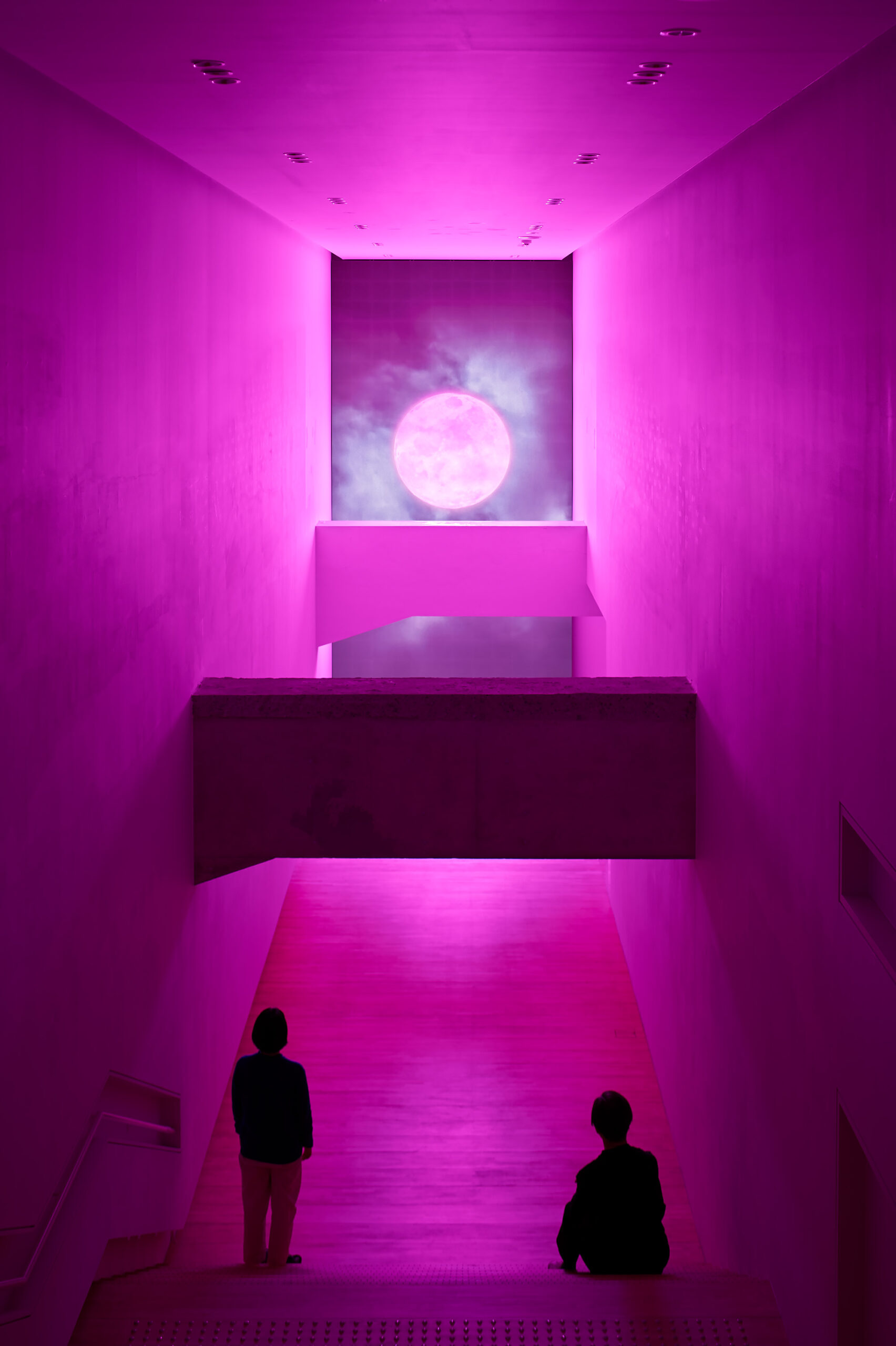
Exbitited between January 24 to March 22, 2026 at Arts Maebashi ( Maebashi, Gunma Prefecture, Japan)
For her first large-scale solo show at a museum, Mukaiyama has transformed the six galleries of Arts Maebashi into an underground theater comprised of a series of corridor-like installations featuring her works, both past and present. These include wasted (2009), a labyrinth of silk dresses; nocturne (2011) which utilizes grand pianos destroyed in the tsunami of the 2011 Great East Japan Earthquake; and the video poem KOKOKARA (2025).
The exhibition title “Act of Fire” is suggestive of both a ritualistic space where feelings of loss, resistance and anger that lie rooted in Mukaiyama’s body and memories are set ablaze, and an action by which the primordial medium of fire is used to throw light on real-world problems such as gender inequality, escalating natural disasters and constant territorial invasions. Images projected in succession within the corridors—family portraits, a male-only fire festival, congealed menstrual blood, tsunami mud, a burning piano—act not only to rekindle memories, but also to invite the audience on a journey to reflect and question the relationship between the self and the world.
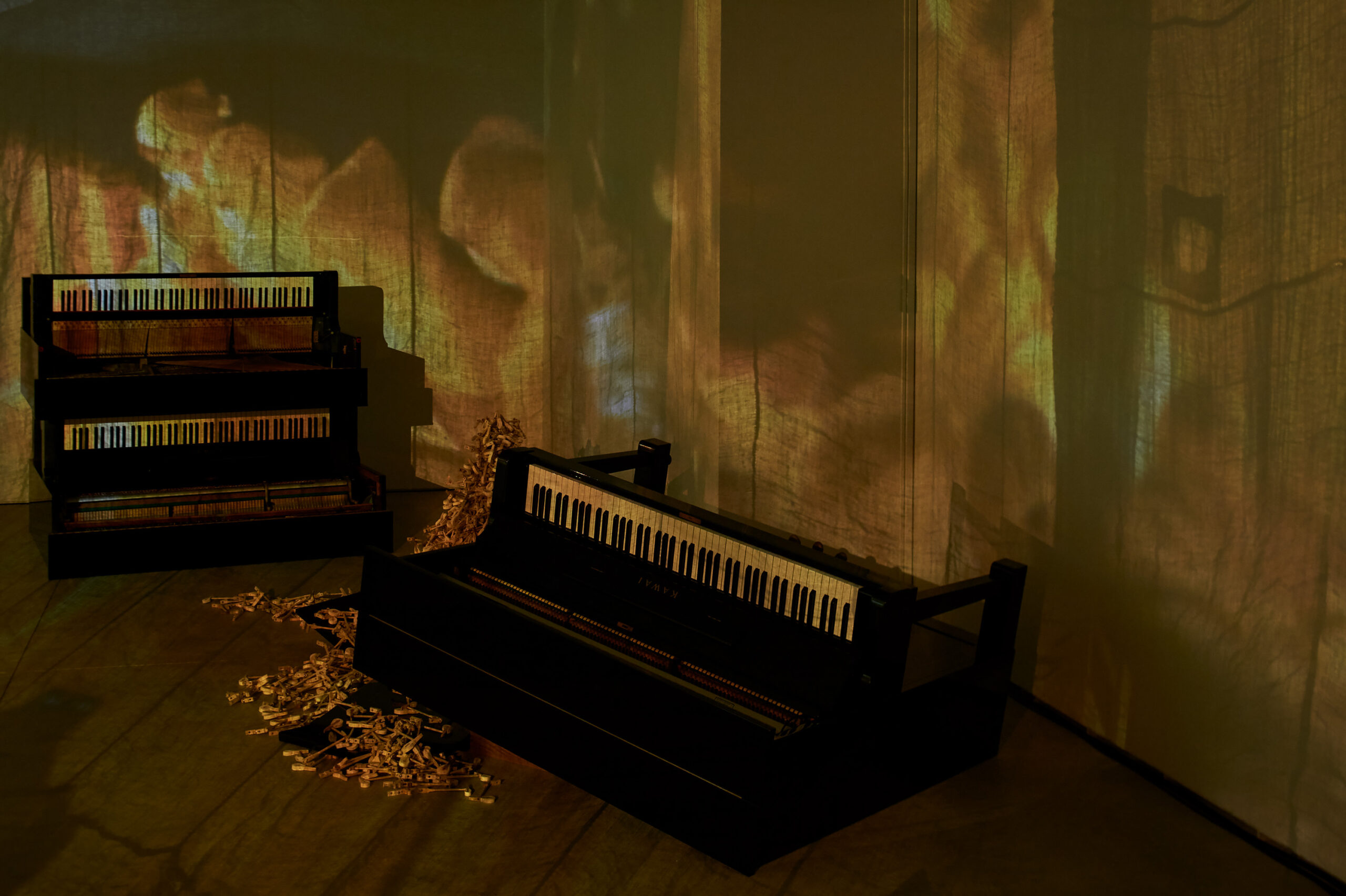
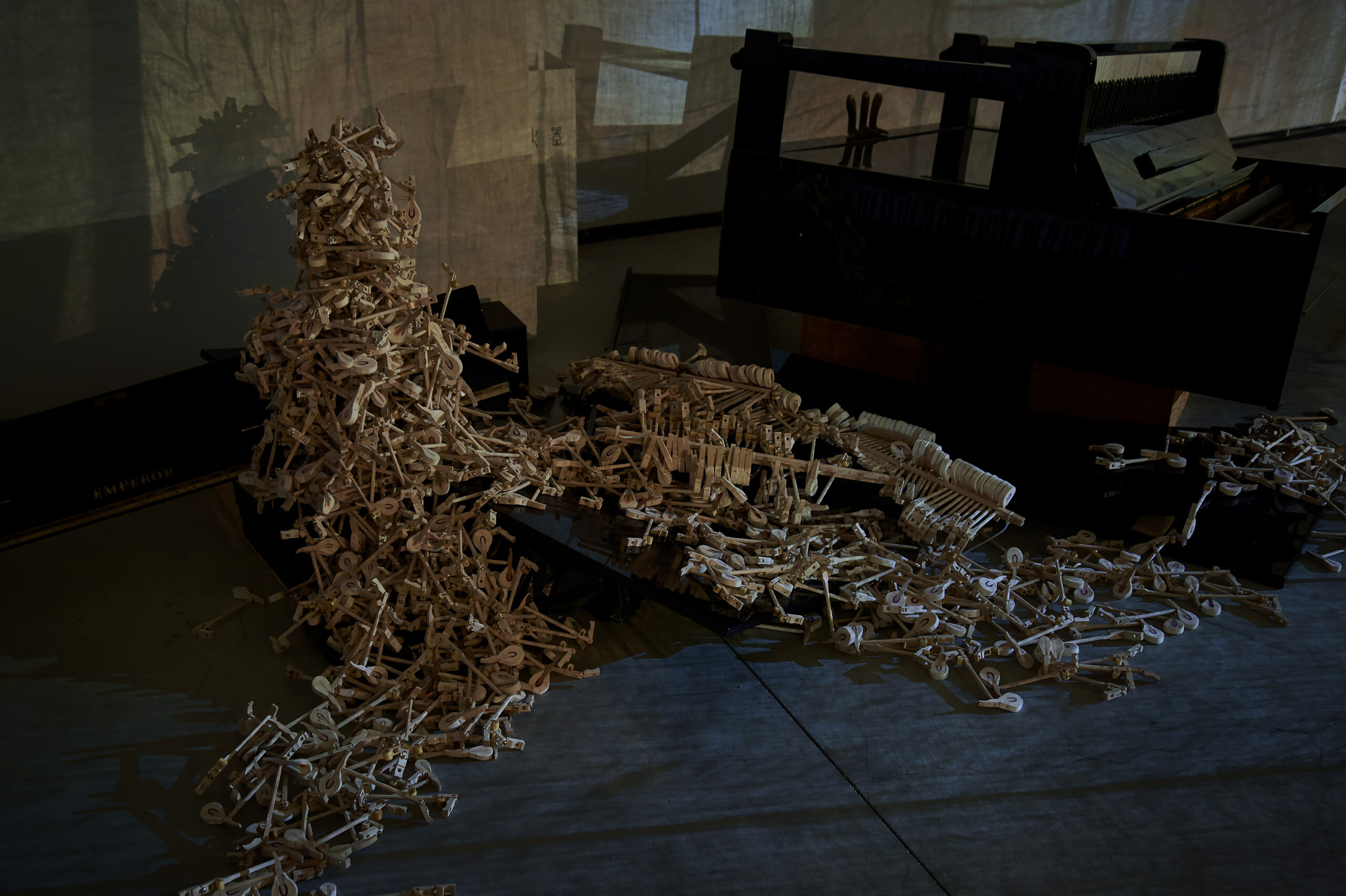
Galleries 1 & 2 | Installation with Two Tsunami-Damaged Grand Pianos
During the exhibition, the date March 11, 2026 coincided with the 15th anniversary of the Great East Japan Earthquake. At the time of the disaster, Tomoko Mukaiyama had planned but failed to perform her work wasted during a tour of Tohoku. On a subsequent return to Japan from Amsterdam, she traveled to the disaster-struck Minato district of Ishinomaki where she encountered two heavily damaged grand pianos.
Mukaiyama took possession of the pianos, which had previously been used at two schools in the area to play the Japanese national anthem and school songs. She incorporated them covered as they were in mud, sand and debris in an installation entitled nocturne in 2011. Eight years later, after partial cleaning and restoration, she used them again in her solo exhibition pianist at Maison Hermès in 2019. Now, six years later, she has reconfigured them again into a new installation.
In the disaster-affected areas, reconstruction and the fading of memories of 3.11 have gone hand-in-hand against a backdrop of worldwide floods and wildfires spurred by climate change and never-ending conflicts between nations and religions. In this installation, the two tsunami-damaged pianos were displayed simultaneously in Gallery 1 on ground level and the underground Gallery 2, connected by an atrium. Visitors were invited to ponder the way the 15 years following 3.11 have been re-presented by Tomoko Mukaiyama through the use of these pianos.
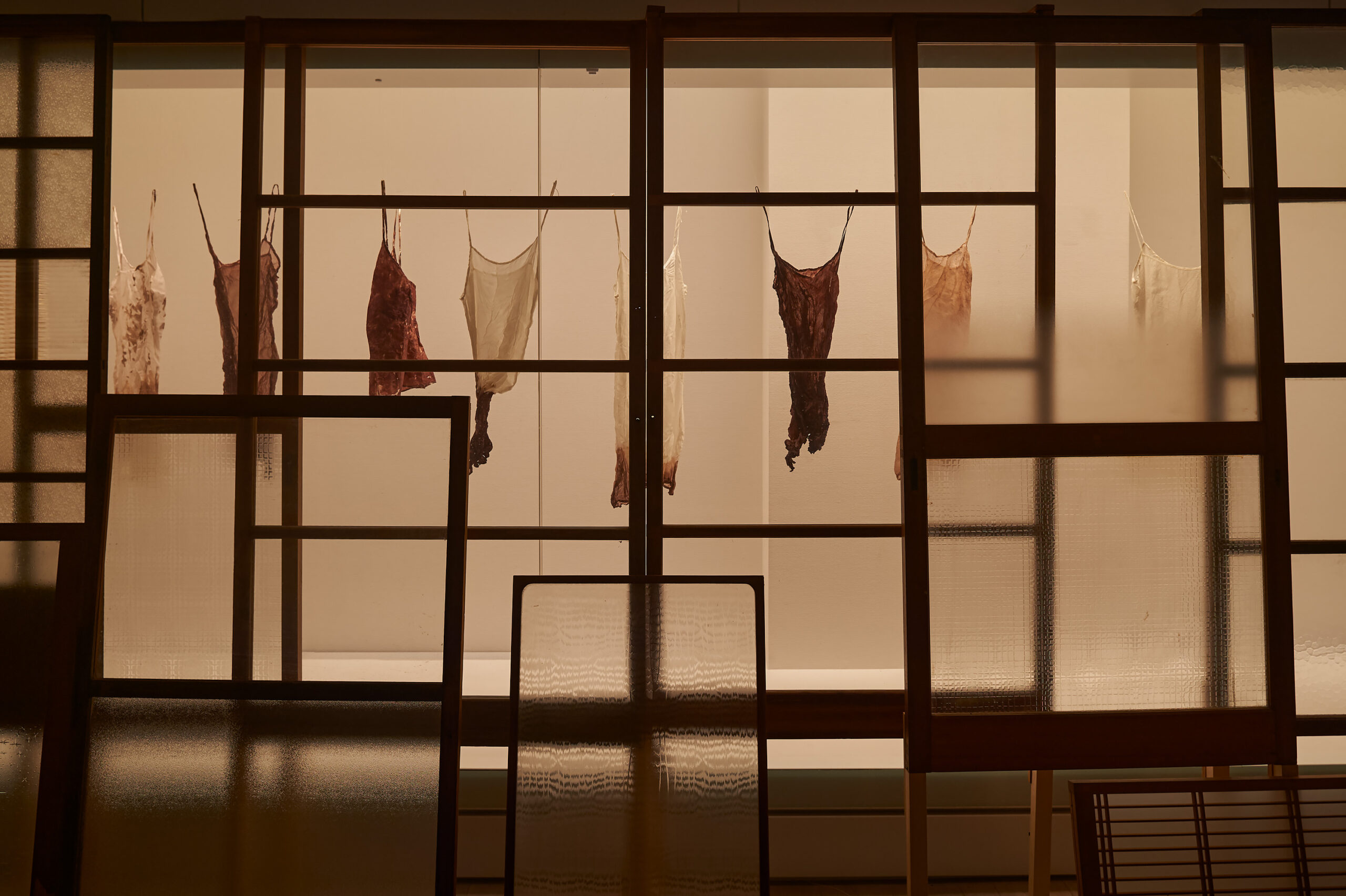
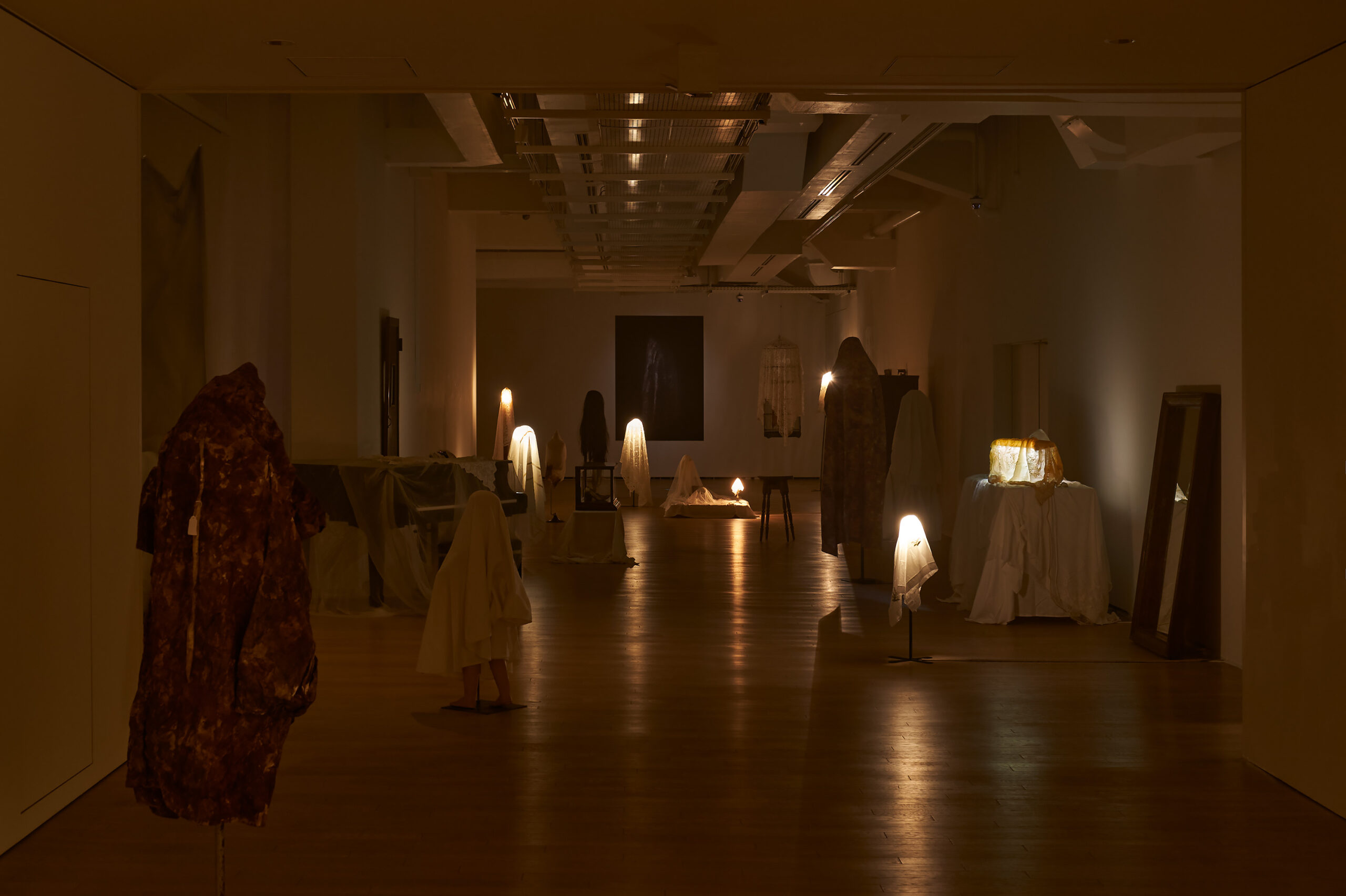
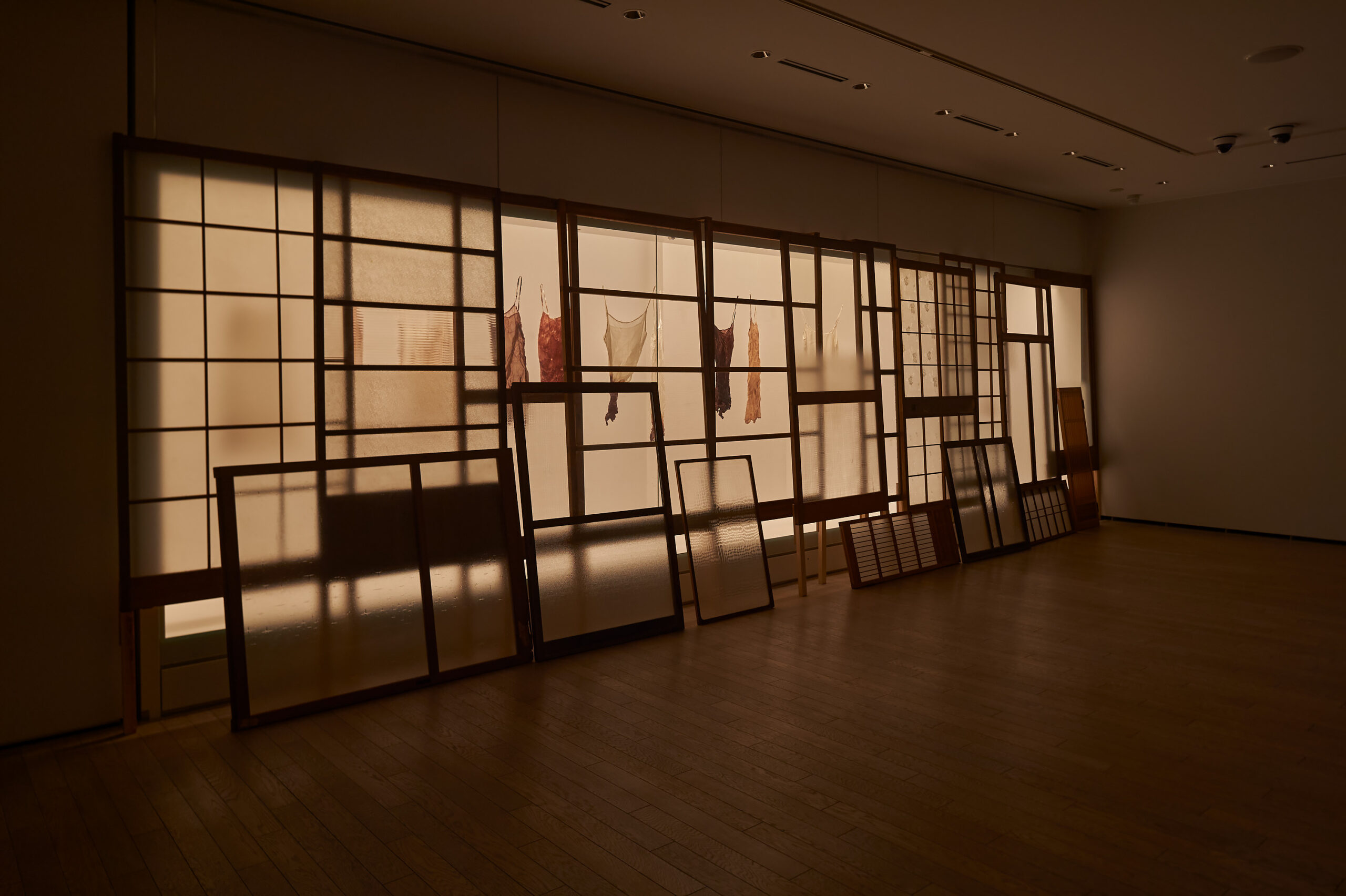
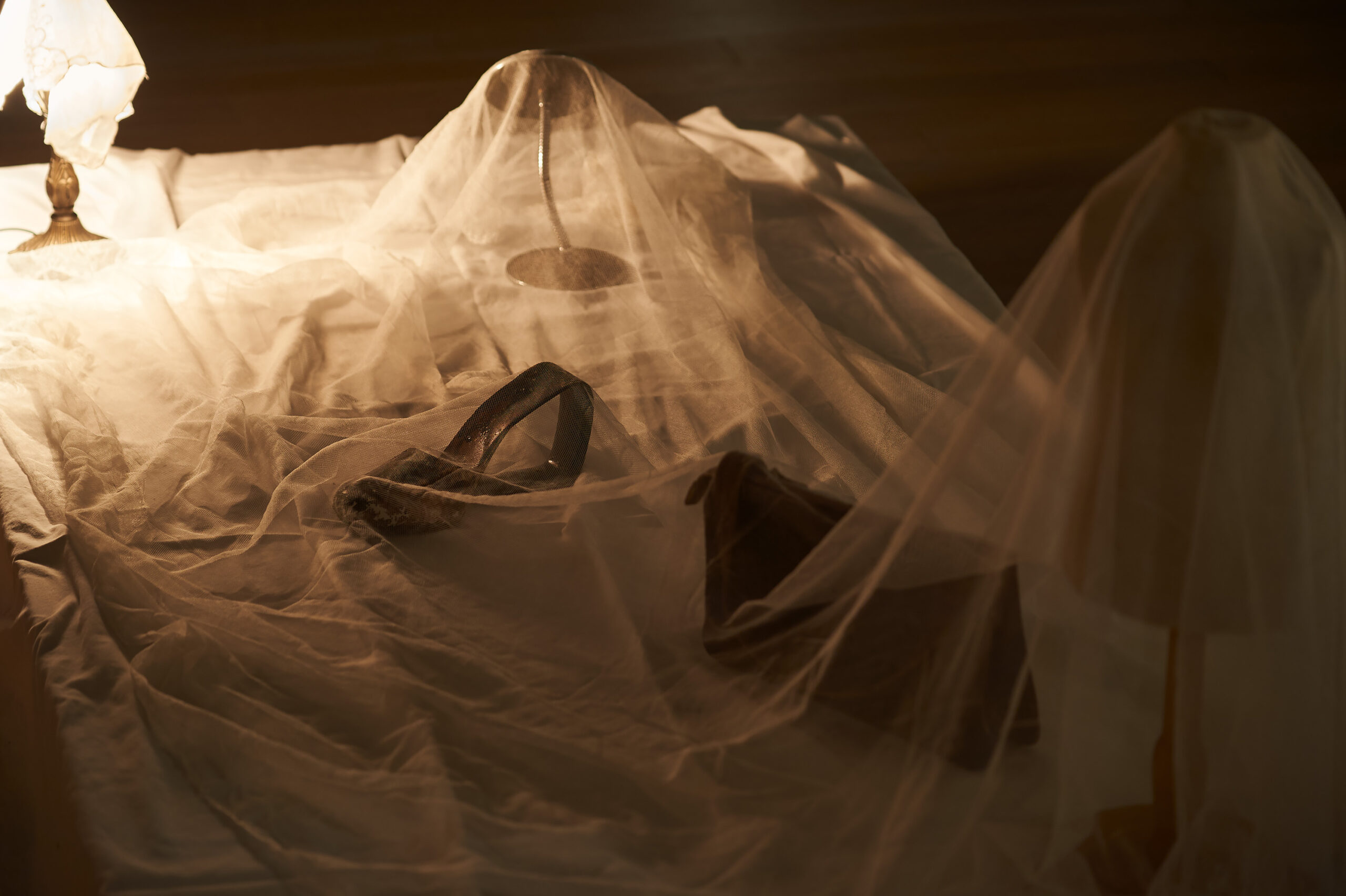
Galleries 3 & 4 | A Corridor of Women Told by Blood-stained Dresses and Shoes
In Arts Maebashi’s underground galleries , Tomoko Mukaiyama used distinctive corridor configuration to descend into the layers of her own memory, tracing her life as both pianist and woman through installations that combine sound, video and objects.
Galleries 3 and 4 featured her large-scale work wasted which first appeared at the Echigo-Tsumari Art Triennale in 2009. Originally consisting of thousands of dresses symbolizing women’s lives and bodies, the installation has been reconfigured to suit the passage-like space with a focus now shifted to her own personal story.
Clothing and shoes stained with menstrual blood, a series of photographs, old birdcages and furniture symbolizing the loss of local ties, family ties and loved ones, and a grand piano left closed are scattered throughout the space. Not only do they speak quietly of her life so far, they invite visitors to engage in a silent dialogue about the variety of painful experiences both past and present surrounding gender diversity.
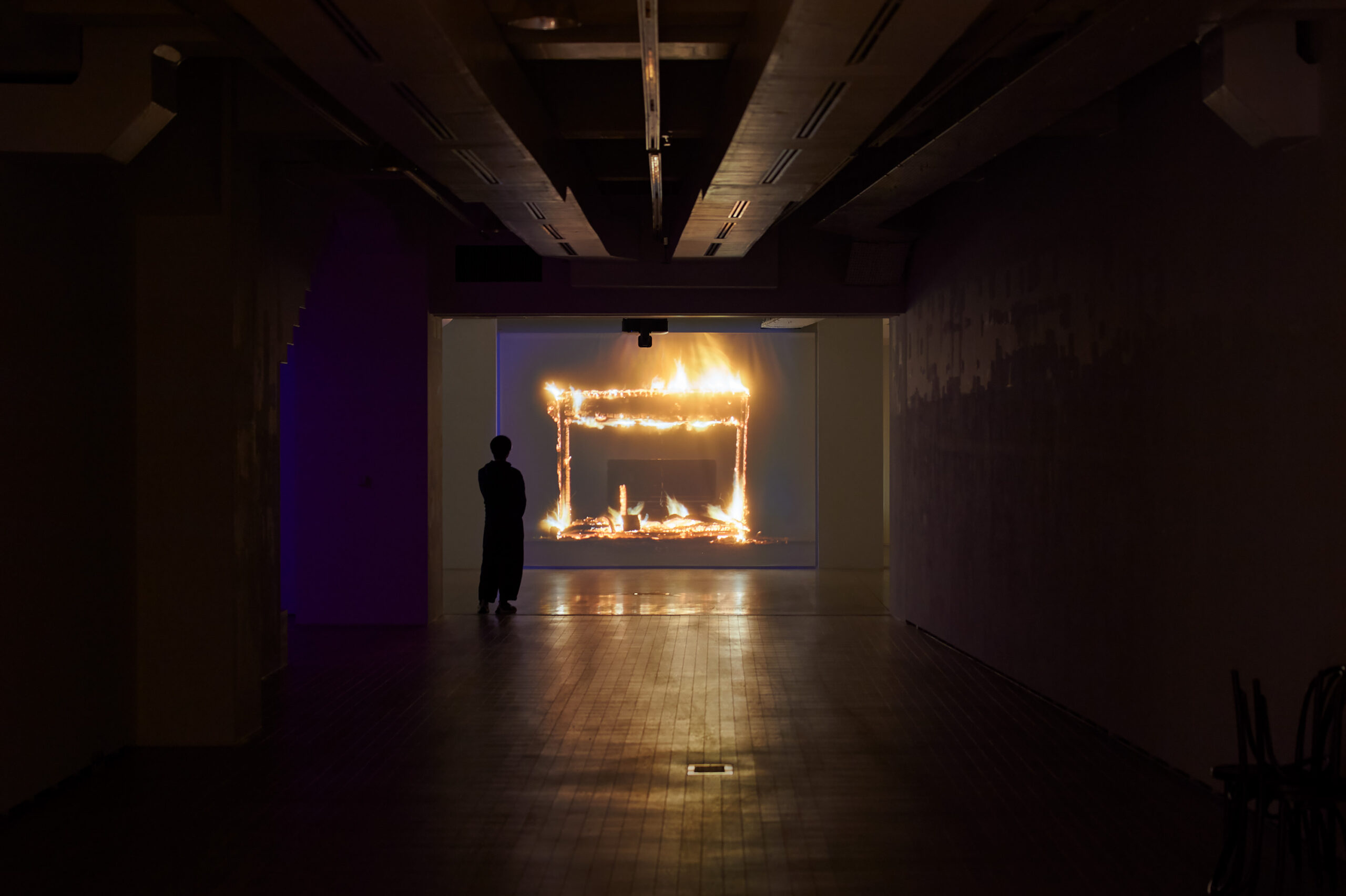
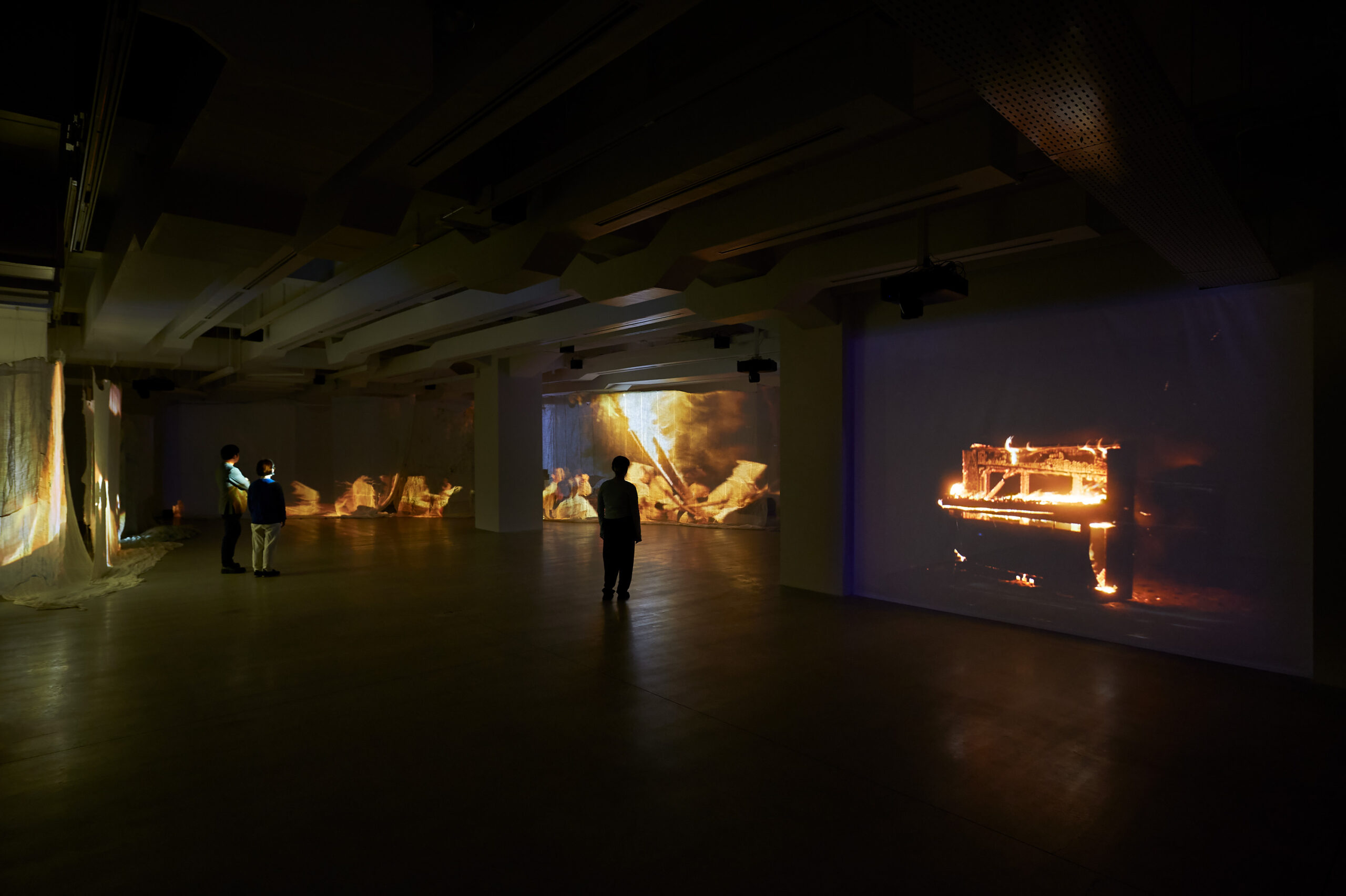
Galleries 5 & 6 | Grand Hall of Images and Music Where the Pains of the World Are Ignited
From the corridor, visitors turn a corner and encounter a piano in flames. It is an upright piano that appeared in Mukaiyama’s 18-minute video poem KOKOKARA which was broadcast free of charge in July 2025 to the public. As she plays Maxim Shalygin’s Nine Preludes in the background, the piano collapses as its keyboard is consumed by flames. It is a vision that is both haunting and majestic.
Entering Gallery 6, a vast installation has been constructed around the burning piano which serves as a climax to Act of Fire. Mosquito nets connected together form curtains that divide the space with close-up images of fire cast upon them from multiple projectors. The effect is immersive, making it seem as if the entire room and the audience are engulfed in flames.
The flames that burn throughout the room are not only those that arise from the piano. The images, layered like flashbacks, show scenes of war in the Gaza district of Palestine where a humanitarian crisis continues to unfold, and scenes of the torches carried during the fire-lighting Oto Festival in Mukaiyama’s hometown of Shingu, Wakayama. These images suggests that the flames rise not only from Mukaiyama’s personal perception and rage, but also from pains in the wider world, lit here to be shared and sublimated.
SIDE EVENTS during Exhibition
Special Dialog: Kazuko Koike × Tomoko Mukaiyama
On the opening day of Act of Fire, a special talk took place between Tomoko Mukaiyama and Kazuko Koike, the renowned creative director and pioneer in art, fashion and design in Japan – a rare dialogue between two artists who have explored creativity across multiple disciplines and found resonance in each other’s work.
Date & Time: Saturday, January 24
Venue: Arts Maebashi Studio
Tomoko Mukaiyama Piano Concert – presented by Gâteau Festa Harada
Date & Time: Saturday, March 7
Venue: Espoir Hall, Gâteau Festa Harada Head Office
1207 Shinmachi, Takasaki, Gunma
Program: Maxim Shalygin — Nine Preludes
All proceeds were donated to Médecins Sans Frontières (Doctors Without Borders).
Credits
Organizer: Arts Maebashi
Special Support: Tomoko Mukaiyama Foundation, Multus
Production Support: LUFTZUG, Reinier van Brummelen
Curators: Takenori Miyamoto, Misaki Azuma
Supported by: Japan Arts Council, Netherlands Performing Arts Foundation, Amsterdam Arts Fund
Sponsored by: THE JOMO SHIMBUN, Gunma Television, FM GUNMA, Maebashi City FM, Maebashi Chamber of Commerce and Industry